
The "Banjica" Institute is not only a place where bodies are healed, but also souls. Dr. Nikola Bogosavljević, with his team, creates an environment that exudes warmth and support, especially for the youngest patients. Nikola shares with us his vision, motivation, and plans for the future, showing that every individual can make a big difference.
Nikola, to start, tell us a bit about yourself and introduce the institution where you work.
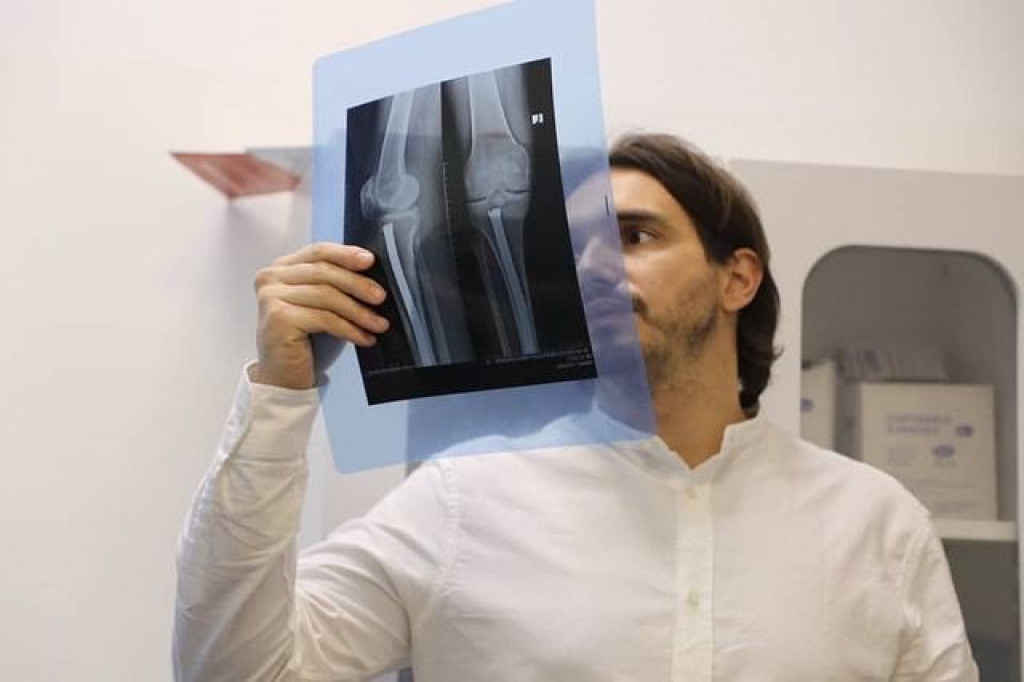
My name is Dr. Nikola Bogosavljević, and I am a specialist in the Orthopaedic Oncology Department, the only such department in Serbia, which is located at the "Banjica" Institute for Orthopaedic and Surgical Diseases. The Banjica Institute is one of the most important orthopaedic institutions in the region, recognised for its expertise and tradition in treating the most complex cases. Our department is dedicated to the diagnosis and treatment of patients with tumours of the locomotor system, and we work with patients of all ages – from children and young people to the elderly. We are especially committed to performing complete resections of soft tissue tumours and bone tumours, as well as reconstructions after tumour removal, using the most modern surgical techniques. Our goal is to provide patients with the best possible conditions for treatment and recovery.
Where did the idea for the initiative to renovate the children's rooms in the Oncology Department at Banjica come from?
The idea stemmed from the desire to provide all our patients, especially children, with a more pleasant environment during their stay in the hospital. Children face specific challenges when it comes to diseases such as oncological conditions, and I believe that the space where they spend time during treatment can play a crucial role in their emotional and psychological state. Our goal was to adapt the rooms so that they do not resemble classic hospital rooms, but rather exude cheerfulness and provide a sense of warmth and security, which can contribute to better recovery. The approach to your team and the request to participate in this project together arose from my personal fondness for your brand, but also from the fact that these little people who go through oncological treatment are truly little Tsars and Tsaritsas. They deserve a space that reflects their strength, courage, and fighting spirit.
In this transformation of the space, we received great support from Milovan Marinović and the company Quadrium, whose team, with exceptional care and dedication, installed the foils on the walls that were designed by Braća Burazeri.
In what direction has your profession shaped you as a doctor, and above all, as a person?
Working in this department has taught me how important patience, precision, and determination are in the job, but also how crucial empathy is in working with people facing serious illnesses. Every patient is a story unto themselves and reminds me how important courage and hope are, not only for them but also for me as a doctor. This job has shaped me to value time, health, and relationships with people differently, and to constantly learn and be better – both in my profession and in life.
How can the readers of this blog and Dechkotzar followers get involved or support similar projects?
Everyone who wants to can get involved – either through donations or suggestions for new projects that could improve our patients' hospital stay. Every help, regardless of its size, makes a difference. If anyone has an idea of how they could contribute, they can feel free to contact me via email: boga19@gmail.com. We are open to all initiatives that lead to a better environment for our patients.

What do you learn about children through your work, and in connection with that, about yourself?
Children show me incredible resilience, the ability to find joy and strength even in the most difficult situations. Their cheerfulness and courage are an inspiration, while adult patients bring deeper insights into life priorities and the importance of adapting to circumstances. All of this constantly reminds me of the importance of gratitude, patience, and empathy, not only at work but also in everyday life. Through working with patients, I continuously learn both about my limits and how I can overcome them.
What are the next steps, do you have any new ideas for the Institute and the Oncology Department at Banjica?
Our goal is to continue to improve both the medical procedures and the space we work in. We plan additional projects, including technological improvements and support programs for patients of all ages. I want to advance diagnostic and surgical methods, as well as develop programs that will allow patients and their families to cope more easily with the challenges during treatment. Also, an important step is the education and raising of public awareness about this specific pathology through cooperation with other institutions and organizations, which will contribute to better support for patients and the expansion of expert knowledge.


